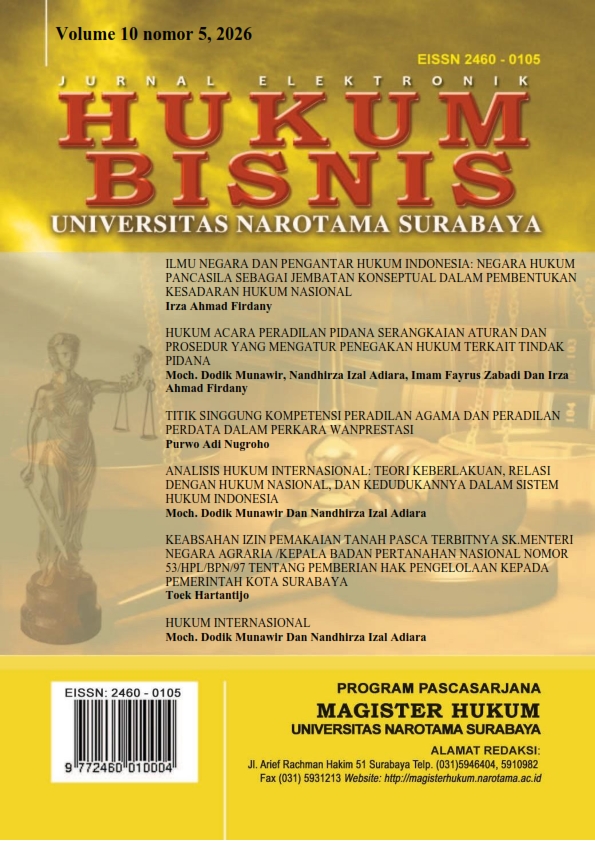
HUKUM ACARA PERADILAN PIDANA SERANGKAIAN ATURAN DAN PROSEDUR YANG MENGATUR PENEGAKAN HUKUM TERKAIT TINDAK PIDANA
Abstrak
Criminal procedural law is a set of rules and procedures governing the enforcement of criminal acts within the criminal justice system. Through criminal procedural law, the process of handling criminal cases is carried out in a structured manner, starting from the stages of inquiry, investigation, prosecution, examination in court, and implementation of court decisions. The existence of criminal procedural law aims to ensure that the law enforcement process runs in accordance with the principles of justice, legal certainty, and protection of human rights for all parties involved in criminal cases. This study aims to analyze the definition of criminal procedural law, its objectives and functions, the principles underlying its implementation, and the parties involved in the criminal justice process. In addition, this study also discusses the stages of the implementation of the criminal procedural process, the types of evidence used in criminal cases, and the differences between criminal procedural law and civil procedural law. The research method used is normative legal research with a statutory approach and a conceptual approach through literature studies of various relevant legal sources. The results of the study indicate that criminal procedural law plays an important role in systematically regulating law enforcement mechanisms and ensuring the implementation of a fair and transparent judicial process. With clear procedural rules, criminal procedure law can protect the rights of suspects, defendants, and victims, while also assisting law enforcement officials in objectively and responsibly establishing the material truth in a criminal case.
Keywords: Keywords: criminal procedure law, criminal justice process, principles of criminal law, evidence, criminal justice system..
##plugins.generic.usageStats.downloads##